
Table of Contents >>
Concerned about the pimple ruining the best time of your life? Dealing with breakouts can be a real torture when you have to go through both the physical pain and the emotional distress at the same time. Sometimes it can also affect your self image and self esteem. But don’t worry, we’ve got you covered! Here’s our guide for you on how to remove pimples naturally.
What are Pimples?
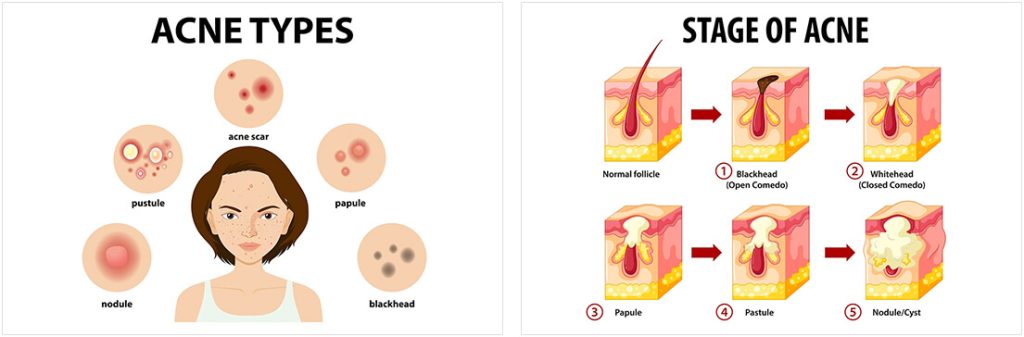
Pimples are one of the symptoms of a more comprehensive skin condition called Acne. The other symptoms of acne include blackheads, whiteheads, cysts, papules, pustules, and more. Pimples appear as small, round, and red in color, and may have a white or yellow center.
The pimples are formed when the dead skin cells and the sebum clog the hair follicles causing swelling. The swelling causes a perfect environment for the bacteria (propionibacterium) to grow leading to infection and puss.
Sebum is vital to the skin as it maintains the skin barrier by offering natural moisturisation. It keeps the skin supple, glowing, and avoids the aging symptoms. It also helps in the removal of dead skin cells and new cell regeneration. However, the androgenic hormones activated during puberty stimulate the sebaceous glands. Hence, the glands produce more sebum than before. The excess oil mixed with the dead skin cells logs the pores leading to pimples and other symptoms of acne.
Causes of Pimples and Pimple Marks
Even though most of the times the pimples start during adolescence, they can occur in people of any age group. There are many triggers other than puberty that cause pimples. Below is a list of possible triggers that can cause pimples in different stages of your life.
- Hormonal imbalance is the prime reason for pimples. The hormonal imbalance leads to excess secretion of sebum leading to clogged pores and pimple formation.
- Genetic factors affect your immune response to inflammation. Hence, it can also be one of the causes for pimples.
- The environmental factors such as temperature, humidity, weather, pollution, and more also contribute to pimple formation.
- Stress adversely affects hormonal balance leading to pimple formation.
- Using comedogenic skincare or makeup leads to clogging of the pores. Going to bed without removing makeup (even the non comedogenic) also triggers pimples.
- Sharing skincare or makeup with people with pimples may transfer the pimple causing bacteria to your skin.
- Certain medications including lithium, androgenic steroids, anticonvulsants, DHEA, or more may cause pimples.
- Certain foods might be the trigger to cause pimples such as milk, sugar, carbs, chocolate, high fiber foods, salmon, nuts, and more.
- Popping pimples the wrong way might push the bacteria and some part of the clog further deep into your skin leading to worsening the pimples.
- Too much sun exposure may trigger the excess sebum production to overcompensate for the loss of oil.
- Friction and pressure on the skin also leads to pimple formation.
Best Ways to Remove Pimples Naturally at Home
Managing pimples is important regardless of their severity to maintain good skin health. There are several physician recommended over-the-counter pimple removal products available in the market. But you can also use some quick and effective recipes at home to manage pimples.
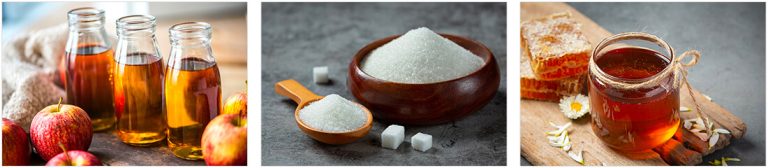
Apple Cider Vinegar, Sugar and Honey Scrub
Ingredients:
- Apple Cider Vinegar has many health benefits. It has organic acids that might help kill the pimple causing bacteria and reduce the appearance of pimple marks.
- Honey is anti-inflammatory, antioxidant and antibacterial. It also exfoliates without making the skin too dry.
- Sugar is a mild exfoliant that removes the dead skin cells and dirt from the skin pores without irritating the skin.
How to Apply
- Wash your face with a mild non comedogenic cleanser.
- Mix 1 TBSP(table spoon) of ACV with 2 TBSP of sugar and 3 TBSP of honey.
- Apply it on your face evenly.
- Wait for 15 minutes and rinse off.
Note:
- ACV is a strong acid. So, do not use it directly on the skin without diluting.
- Be cautious with the quantities. A larger amount of ACV may have an adverse effect.
- Always test it on an unaffected area of your skin for irritation before applying.
- Even though it’s tempting, do not apply it more than twice a week.
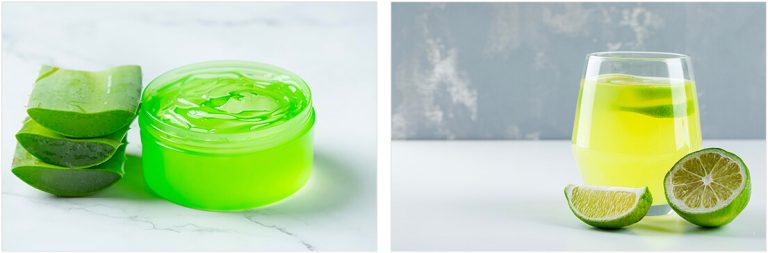
Aloe Vera and Lemon Juice Mask
Ingredients:
- Aloe Vera is known for its antimicrobial, antibacterial, anti oxidant, and anti-inflammatory properties. It exfoliates and hydrates naturally to soothe the irritated skin.
- Lemon Juice also has antibacterial, antiseptic, and inflammatory properties. It dries out the excess sebum and its acidic properties might help kill the pimple causing bacteria.
How to Apply:
- Wash your face with a mild non comedogenic cleanser.
- Mix 2 TBSP aloe vera with 4-5 drops of lemon juice.
- Apply it on your face evenly.
- Wait for 10 minutes and rinse off.
Note:
Citric acid in lemon juice might irritate your skin if applied in large quantities. So, be cautious with the quantities and do not use it directly on the skin without diluting.
Tea tree Oil and Coconut Oil
Ingredients:
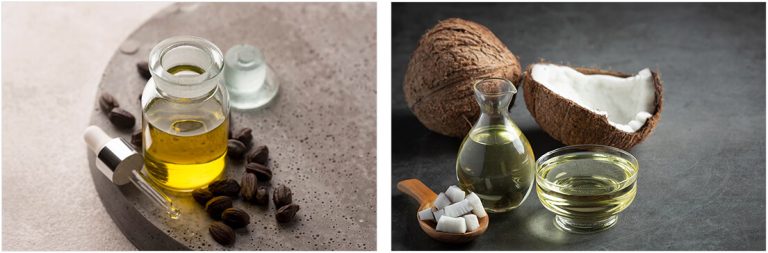
- Tea tree oil is known for its antibacterial, antimicrobial, antifungal, and antiinflammatory properties. Applying the tea tree oil on pimples and other kinds of acne will help in reducing inflammation, fighting bacteria, and soothe the skin.
- Coconut oil also has all the antibacterial, antimicrobial, antifungal, and inflammatory properties that help in faster healing of the pimples and acne.
How to Apply:
- Wash your face with a mild non comedogenic cleanser.
- Mix 1 TBSP of coconut oil with 2 drops of tea tree oil.
- Dip a clean cotton ball into the mixture and apply on the pimples.
- Apply once or twice a day depending on your requirements.
Note:
- Tea tree oil is very strong. So, do not use it directly on the skin without diluting.
- Be cautious with the quantities of the oils. A larger amount of tea tree oil may have an adverse effect and cause inflammation.
- Always test it on an unaffected area of your skin for irritation before applying.
Green Tea, Aloe Vera, Honey Facemask
Ingredients:
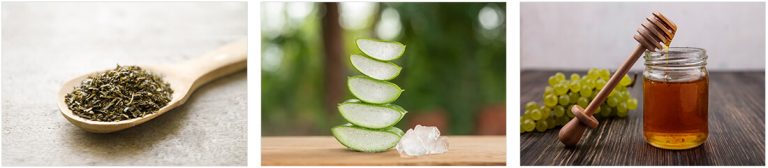
- Green tea has anti-inflammatory, anti oxidant, and antimicrobial, and antibiotic properties. The EGCG (epigallocatechin gallate) in green tea is anti androgenic and helps in lowering lipid levels. The anti-androgenic properties of green tea helps reduce the sebum production leading to less clogged pores.
- Aloe Vera is known for its antimicrobial, antibacterial, anti oxidant, and anti-inflammatory properties. It exfoliates and hydrates naturally to soothe the irritated skin.
- Honey can be used in place of aloe vera. It is anti-inflammatory, antioxidant and antibacterial. It also exfoliates without making the skin too dry.
How to Apply:
- Empty the green tea from 2 tea bags into a tea infuser.
- Dip it into the warm water and wait until the leaves are moistened.
- Mix the moistened leaves with 1-2 TBSP of Aloe Vera gel or honey depending on your requirements.
- Apply the mixture evenly on the affected area.
- Rinse off after 15 minutes.
Quick Fixes
- Applying ice on the pimple is soothing and also helps reduce swelling. Ensure that you do not directly apply the ice on the pimple. Wrap it in a towel and apply on the affected area for 3-5 minutes.
- Aspirin contains salicylic acid. Crush 1 or 2 tablets and mix it with water to make a paste. Apply it to the pimples. Rinse off after 10-15 minutes.
- Scoop the fresh aloe vera gel from the aloe vera leaf and apply directly on the pimples. Leave it on overnight.
Brew some green tea leaves and cool the brewed liquid. Use a spray bottle to spray it on your face or appy using a cotton ball.
How to Remove Pimple Marks Easily?
The prime reason for acne is clogging in the skin pores. Pimples are formed when the body’s inflammatory response is triggered due to the presence of the bacteria. Hence, most types of acne lead to pimple formation. The pimple marks and scars vary depending on the type of acne and other factors.
Boxcar Scars are broad and boxy depressions that mostly occur due to the cystic and nodular acne.
Post-Inflammatory Hyperpigmentation looks like a dark or discolored patch that heals over time with proper sun protection. It is caused by severe acne or popping the pimple the wrong way.
Ice Pick Scars tiny but deep v-shaped scars that are caused due to severe acne.
Rolling scars look like sloped pits in the skin resulting from severe acne.
Hypertrophic scars are thick and have a raised appearance from the skin. These are caused by the excessive fibrous tissue growth during the acne healing.
Knowing the type of pimple marks and scars is vital to get rid of them. Even though few pimple marks and scars can be treated with home remedies, some of them require medical attention of a certified dermatologist.
Over the Counter Treatment for Pimple Marks and Scars
Some over-the-counter creams and lotions available in the market help with reduction of these scars and marks. They might help you reduce the pimple marks and scars. However, if you have sensitive skin or have severe acne and pimple problems, you may have to consult a dermatologist to buy them. Look for these ingredients in your face wash, creams, or lotions.
Salicylic acid is a popular ingredient in pimple and acne treatment formulas such as face wash, creams, and more. The oil soluble beta hydroxy acid penetrates through pores and dissolves into the sebum to extract the excess sebum and dead skin cells. Apart from that, it also protects the skin from blackheads and whiteheads, regeneration of new skin cells, and shrinking the pores widened due to the pimple.
Kojic acid is used in skin lightening treatments. It works by regulating the melanin production that helps get the hyperpigmentation under control.
Azelaic acid treats pimples and decreases pigmentation by suppressing the enzymes causing hyperpigmentation and reduces inflammation.
The keratolytic properties of Glycolic acid helps in reducing the pimple scars by decreasing the thickness of the pimple scars. It also increases the fibroblast cells that repair and regenerate the skin.
Lactic acid helps treat acne, pimples and their scars. It effectively removes the excess sebum and impurities from the skin. In addition, it also hastens the process of skin cell regeneration.
Retinol plumps the scarred area with collagen to treat the pimple scars. Hence, it is also a popular ingredient in many anti aging creams as well. In addition it also helps by boosting the skin cells division and regeneration.
There are medical procedures such as microdermabrasion, injections, fillers, lasers, and surgery which you can choose with a dermatologist’s consultation.
Home Remedies to Remove Pimple and Pimple Marks
Pimple marks and scars can be treated to some extent using the ingredients available in your kitchen or garden. Even though these recipes lack scientific evidence to prove their efficacy, the medicinal properties of the ingredients may contribute to their usefulness in pimple marks and scar removal.
Orange Peel and Honey Mix
Ingredients:
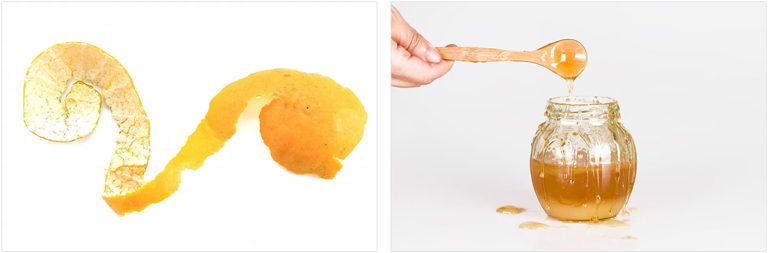
- Orange Peels have the polymethoxy flavone that inhibits melanogenesis which may help in lightening tan.
- Honey is anti-inflammatory, antioxidant and antibacterial. It also exfoliates without making the skin too dry. It promotes healing and skin cells regeneration.
How to Apply:
- Wash your face with a mild non comedogenic cleanser.
- Mix 1 TSP orange peels powder with 1 TSP of honey.
- Apply it on the pimple marks.
- Wait for 10-15 minutes and rinse off.
Poppy Seeds and Curd
Ingredients:
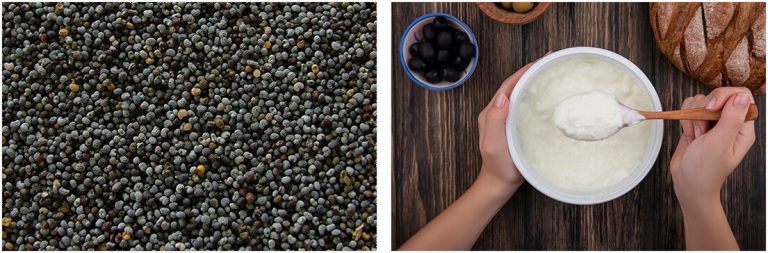
- Poppy Seeds are natural exfoliants and encourage new skin cell regeneration.
- Curd has a good amount of zinc and lactic acid that helps remove dead skin cells and reduce inflammation and redness reducing the appearance of pimples caused by acne.
How to Apply
- Wash your face with a mild non comedogenic cleanser.
- Soak 1 TBSP poppy seeds in 3-4 TBSP of thick curd.
- Make a paste of the mixture once the poppy seeds are soaked properly.
- Apply on the pimple scars or marks.
- Wait for 15 minutes and rinse off.
Lemon and Gram Flour
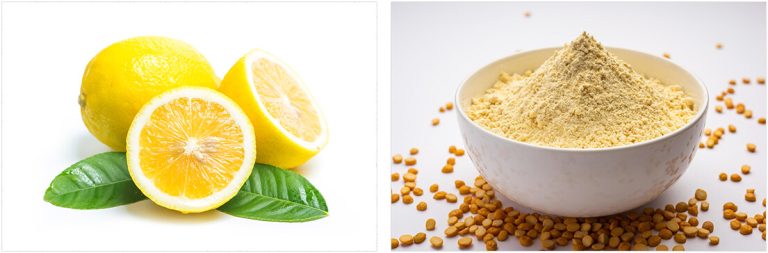
Ingredients:
- Lemon has citric acid that exfoliates and promotes skin cell regeneration.
- Besan or gram flour is a natural exfoliant. The zinc in besan fights the blemishes and reduces pimple marks. It also helps by regulating the sebum production.
How to Apply:
- Wash your face with a mild non comedogenic cleanser.
- Add 1 TBSP of lemon juice to 1 TBSP of besan or gram flour to make a paste.
- Apply on the pimple scars or marks.
- Wait for 10 minutes and rinse off.
Lady's finger (Okra) and Honey
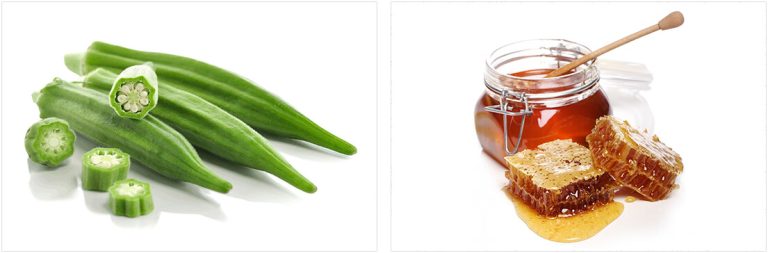
Ingredients:
- Okra or lady finger is rich in vitamic C, and fibre. These help in the extraction of toxic waste, repairing the skin tissue, and controlling pigmentation.
- Honey is anti-inflammatory, antioxidant and antibacterial. It also exfoliates without making the skin too dry. It promotes healing and skin cells regeneration.
How to Apply:
- Wash your face with a mild non comedogenic cleanser.
- Crush the okra to make a paste.
- Mix 1 TBSP of okra paste with 1 TBSP of honey.
- Apply on the pimple scars or marks.
- Wait for 10 minutes and rinse off.
Turmeric and Coconut Oil
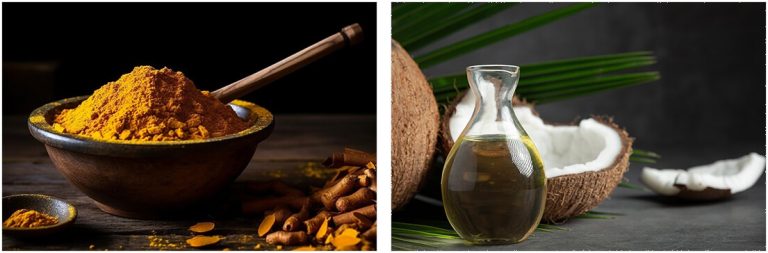
Ingredients:
- Turmeric is known for its anti-inflammatory, antiseptic, antioxidant, antibacterial, antifungal, and antiviral properties. Curcumin in turmeric may be effective in pimple scar healing.
- Coconut oil increases collagen and binds the new skin tissues together to reduce scarring after pimples.
How to Apply:
- Mix ¾ TBSP of turmeric with 1 TBSP of coconut oil.
- Apply on the pimple scars or marks.
- Wait for 30 minutes and rinse off.
Clinical Approach: When to Consult a Dermatologist?
Pimples are a very common symptom of acne. They are not threatening as long as you have one or two pimples once in a while. However, if you have severe pimple problems such as persistent, large, painful, and widespread pimples, you may require a dermatologist’s consultation. Below are the signs that you must consult a dermatologist.
- Pimples that are not responding to over the counter treatments.
- Painful pimples.
- Large and deep bumps with pus.
- Pimples are leaving recognizable marks and scars on your skin.
- They are affecting your self esteem.
- Pimples accompanied by fever and joint pain. They may indicate underlying serious health problems.
Conclusion
Pimples are a common skin condition during puberty. Even though they are not fatal, severe pimples are capable of causing enough damage if left untreated. But fortunately, today many medical remedies and over the counter remedies are available to manage pimples. Additionally, our natural home remedies recipes using the common ingredients found in your kitchen or garden will help you fight pimples effectively. Do not forget to practice proper skin care and hygiene to fight pimples and acne.